Journal The Third Entity
The Third Entity: When AI Enters the Creative Process
On the artist, the Source, and the machine.
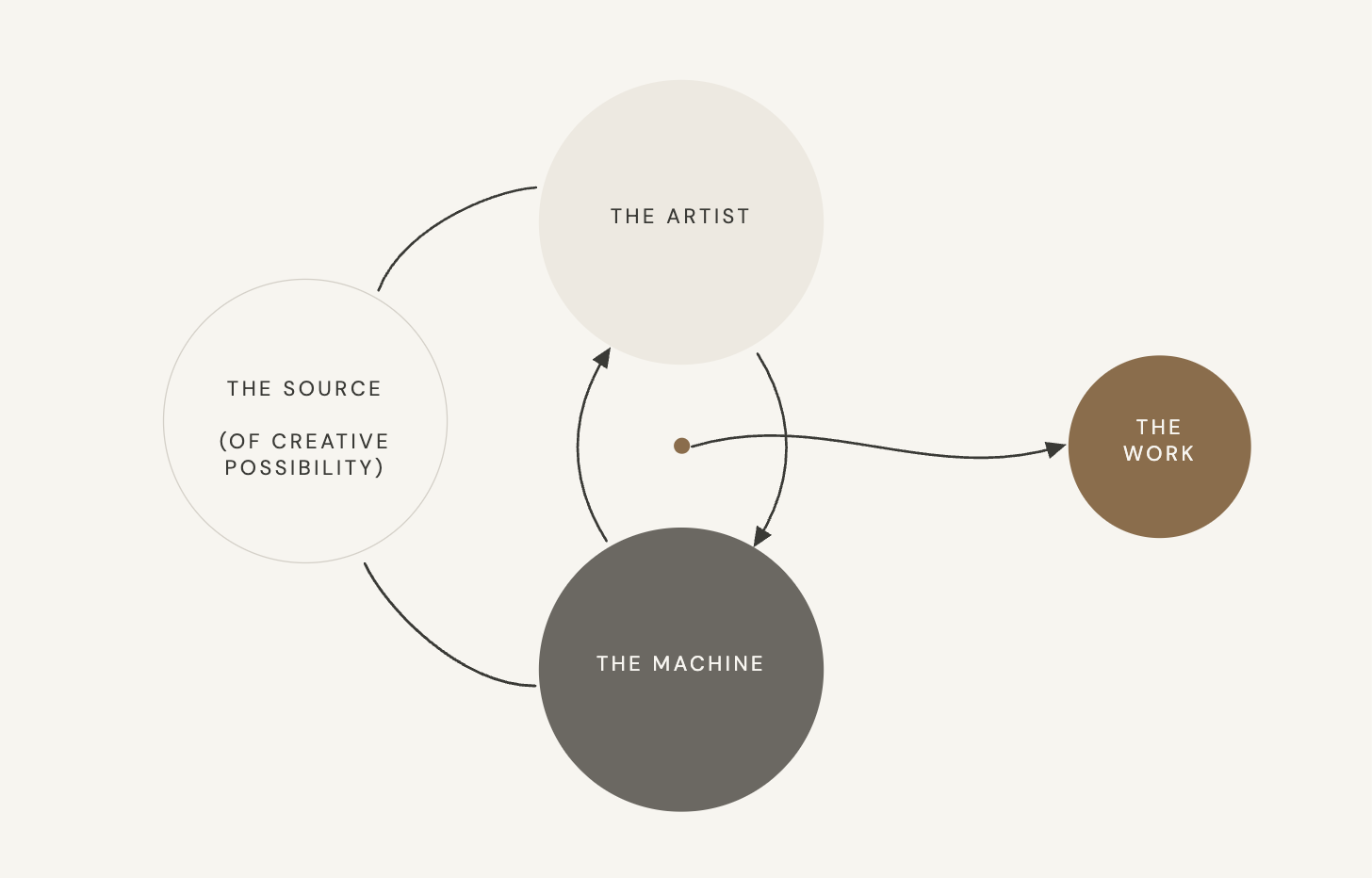
In The Creative Act: A Way of Being, Rick Rubin describes creation as a relationship between the artist and the Source of Creativity: an external, unseen energetic field of inspiration, intuition, and possibility.
He speaks of it in almost spiritual terms — the Source is something we can become receptive to but never fully control. It’s as ever-shifting as a cloud.
I’ve always been drawn to this philosophy.
As a creative, I’ve felt ideas arrive from beyond conscious thought: a small detail no one else noticed, beauty in how the light falls on a surface, a fleeting feeling I want to capture. Through experimentation and making, I follow those signals, often discovering something I couldn’t have conceived if I didn’t follow them.
For a long time, I understood this as a relationship between two entities: the artist and the Source.
But over the past year, as I’ve developed my creative practice with generative AI, I’ve begun to think about a third presence in this process: artificial intelligence.
Not simply as a tool that executes our ideas, but a participant that introduces possibilities we might never have reached ourselves.
I call it the Third Entity.
The artist and the Source
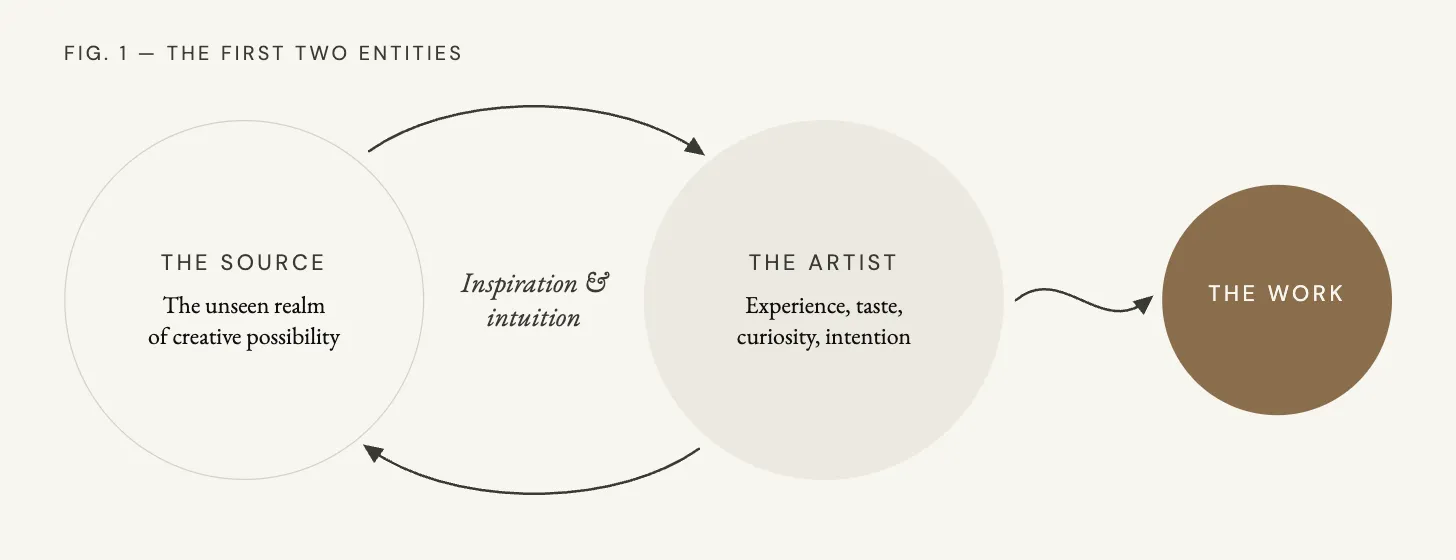
Creativity often begins with intuition. We follow it through research, curation, and experimentation, encountering things we weren’t looking for.
An actor’s unexpected expression can change a scene for a film. The way light hits a subject you’re painting can change the trajectory of the artwork. We don’t necessarily know what we’re searching for until we encounter it.
Our experiences, cultural references, and emotional lives shape what we notice. Even when open to surprise, we explore within our own frame of reference. Our individual imagination is expansive, but not infinite.
This doesn’t mean creative discovery was ever only solitary: artists have always learned from collaborators, environments, and chance encounters.
What changes with AI is the speed and scale at which an unfamiliar interpretation can enter the process. We can test an intuition, encounter an alternative, and respond to it within minutes.
The arrival of the Third Entity
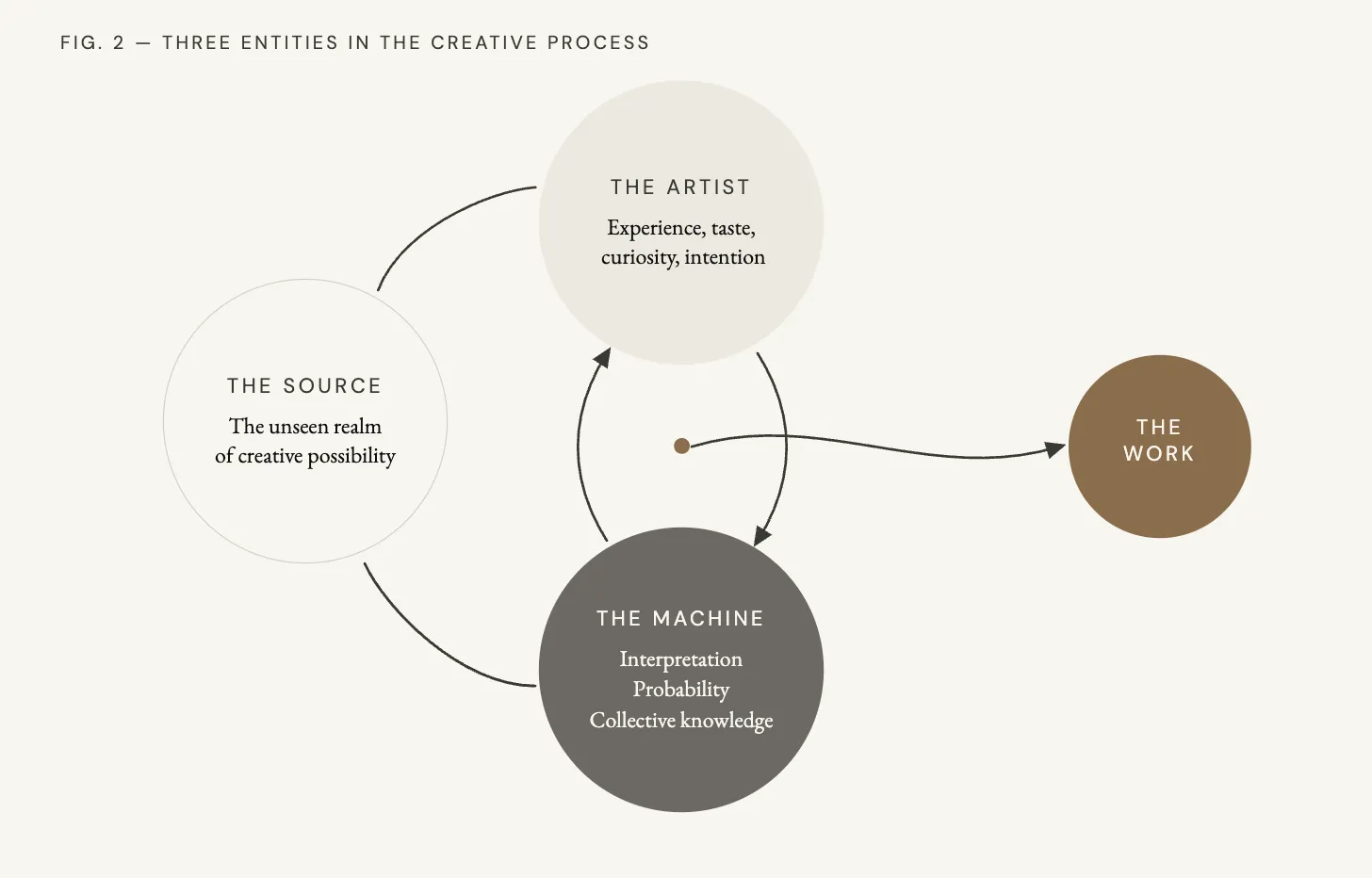
Generative models learn patterns from vast quantities of human-created images — writing, art, photography, film, and language. In that sense, we’re interacting with a computational reflection of humanity’s collective imagination.
Not a literal “collective consciousness”, but a system capable of producing unexpected associations from accumulated human expression. It generates interpretations through probability, and those interpretations don’t always follow the paths we would choose.
The process goes like this:
- The artist brings intention.
- The machine expands the territory.
- The artist encounters something unexpected, recognizes its possibility and decides to further explore this route.
Through our interaction with the Third Entity, something new emerges.
The expansion of possibilities
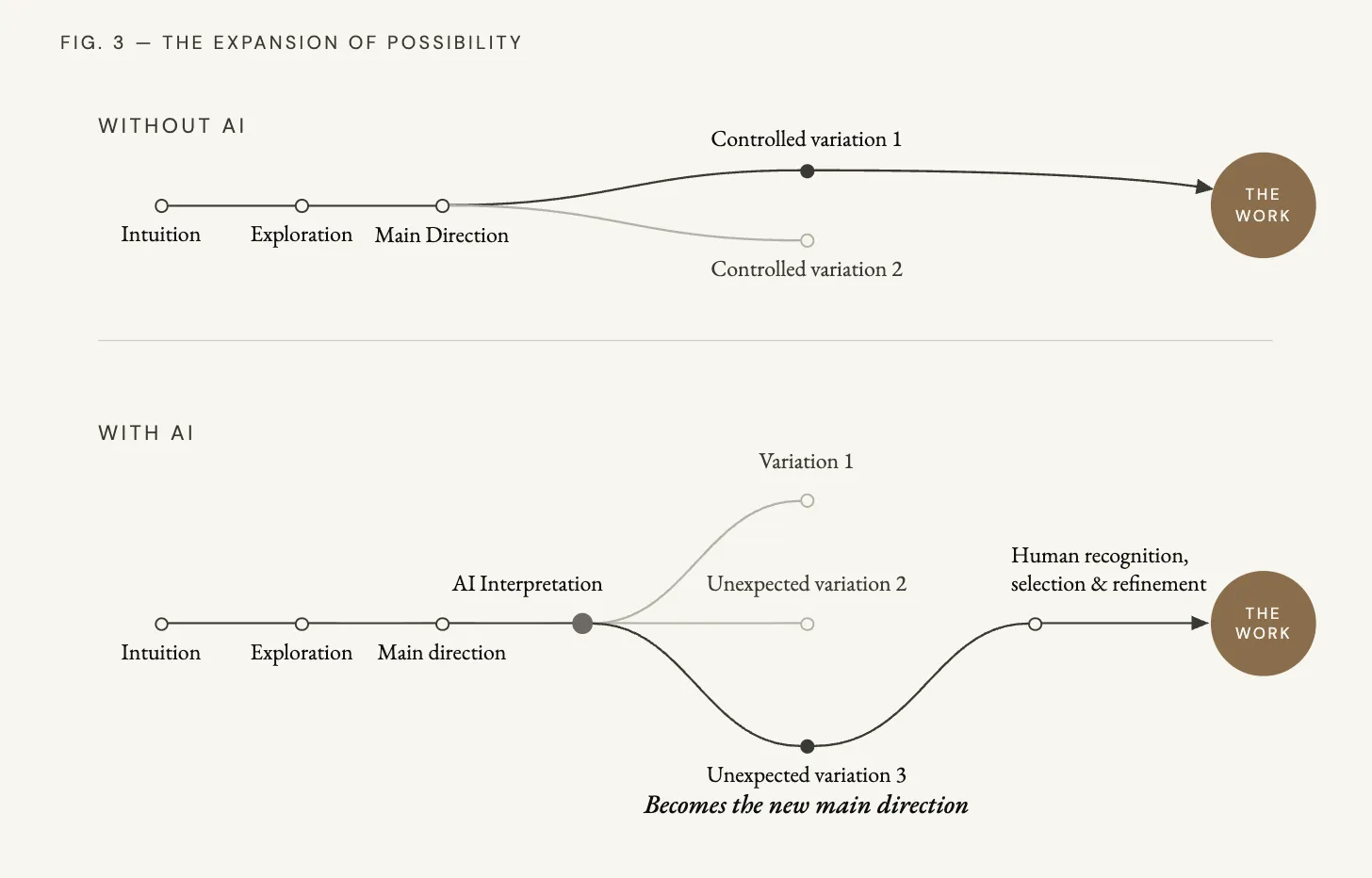
In traditional independent creative process, we follow an idea through a series of explorations and decisions, and from that we may have a few controlled routes for the work to go down.
With generative AI, that process can branch in more unexpected directions.
You might begin with a clear concept, but the model introduces an unfamiliar composition, an unusual movement, or an association you hadn’t considered.
That result sparks a new idea. You follow it. The next result opens another possibility.
What matters here is not simply having more possibilities, but that the artist encounters something outside their original imagination—and has the opportunity to identify and develop it into something meaningful.
This distinction became particularly clear to me through two projects.
Convergence: the artist and the machine
My early AI artwork Convergence began with an accident.
Sitting in front of my black TV screen, I noticed a rainbow light refracting across it from an ornate spinning lamp behind me.
The colors vibrated, slightly out of register— it felt accidental and cosmic at the same time. I wanted to capture the feeling before it escaped my mind.
Since the moment was difficult to photograph, I described the scene and its feeling to Midjourney. Through dozens of iterations, an unexpected form emerged: two entities colliding.
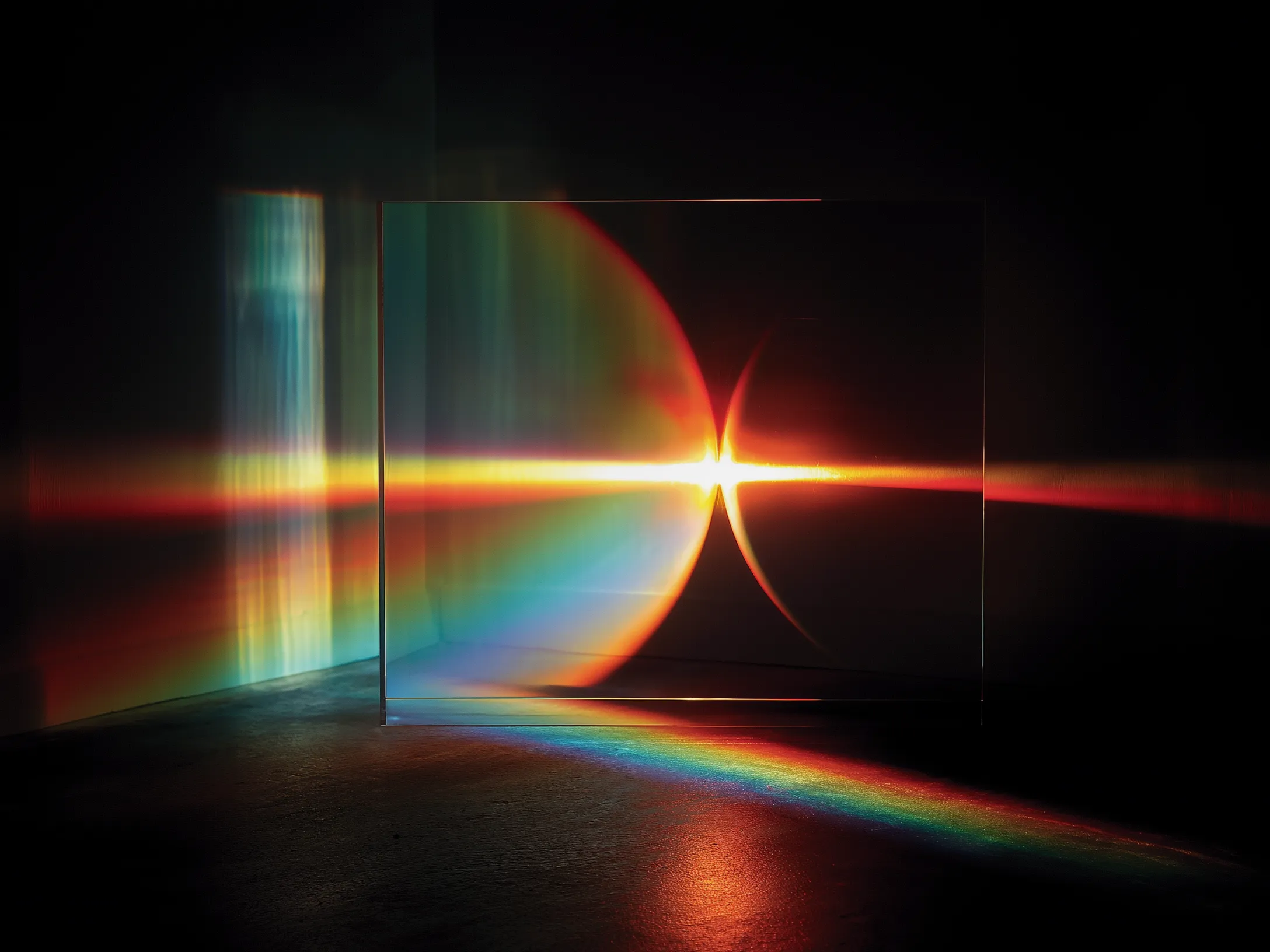
When I saw it, something clicked. It seemed to express the very process through which the artwork was being made: two different systems meeting and producing something new.
Had I accepted the first plausible image, I might have produced something visually literal but conceptually empty. Instead, the iterations gave me a chance to notice a version that resonated, reject what didn’t, and discover the form that belonged to the idea.
Recognition is, in itself, a part of creation.
Rick Rubin describes coincidences as clues. Generative AI offers another environment for such discoveries—one where unexpected interpretations can take us beyond our own associations.
Into the Toile: directing the unexpected
I experienced another dimension while creating Into the Toile, an AI-generated campaign film for lingerie brand CUUP.
One complex scene placed a photorealistic woman rowing a boat within the illustrated waterfall world of the Toile print, alongside a tiger, butterfly, and bird.
I imagined how the characters and elements might interact. But while animating, I couldn’t fully control the bird’s path, the tiger’s movement, or the exact intensity of the water’s gush.
Some generations were wrong. Others introduced details I genuinely liked—such as how the water ripples animated around the oars in that charming illustrative style.
My job wasn’t to eliminate every unpredictable element. It was to know the world well enough to recognize which details belonged.
Direction is not the elimination of chance. It is knowing the work well enough to recognize which accidents belong.
Traditional filmmaking works similarly. A director establishes the scene’s intention, blocking, performance, camera language, and atmosphere. Yet, an actor’s improvised gesture or an unexpected torrential downpour may make the outcome better.
The risk: when collaboration becomes surrender
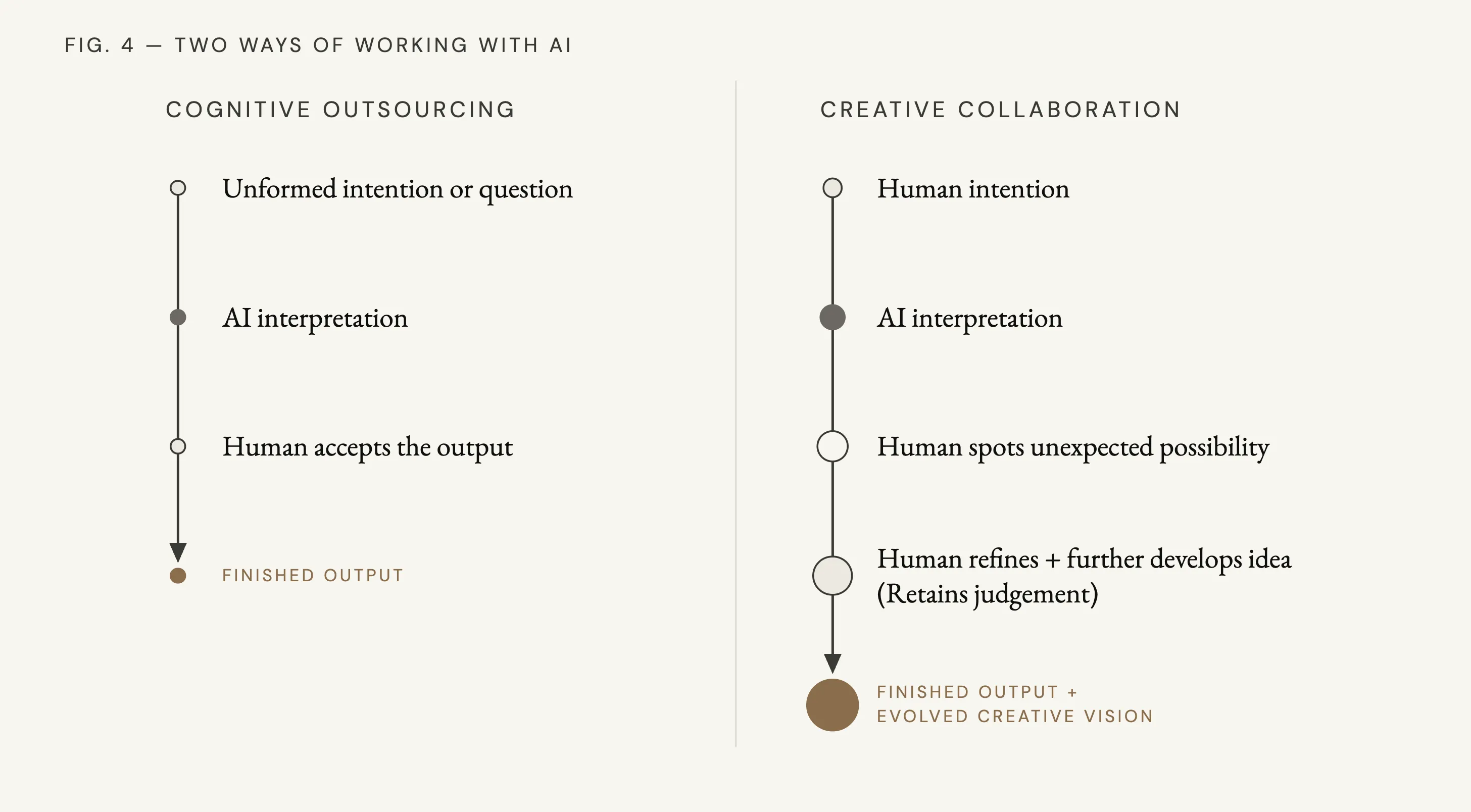
There’s, of course, a risk to having a relationship with generative AI.
Recently, a software engineer friend described the temptation to ask AI to resolve a technical problem rather than spend an hour understanding something he might never encounter again.
Admittedly, even though I consider myself a decisive person, I sometimes have to also consciously stop myself from asking AI for its opinion.
As humans, we naturally seek efficiency and the route of least friction. But some friction is essential to developing creative judgment: sitting with an idea, struggling with uncertainty, forming an opinion before requesting someone else’s.
There’s a difference between asking AI to explore an idea and asking it to decide what the idea should be.
Delegation is useful. In production, it can free us from repetitive technical work and create room for more ambitious exploration. But the distinction isn’t simply technical vs artistic tasks. It is whether the part we delegate is something we actually want to learn, understand, or take responsibility for.
If we outsource the decisions that shape our point of view, we may become more productive without becoming more creative.
The Third Entity can expand our imagination—or quietly substitute for it. The decision is ours.
Human Directed™: knowing what to delegate
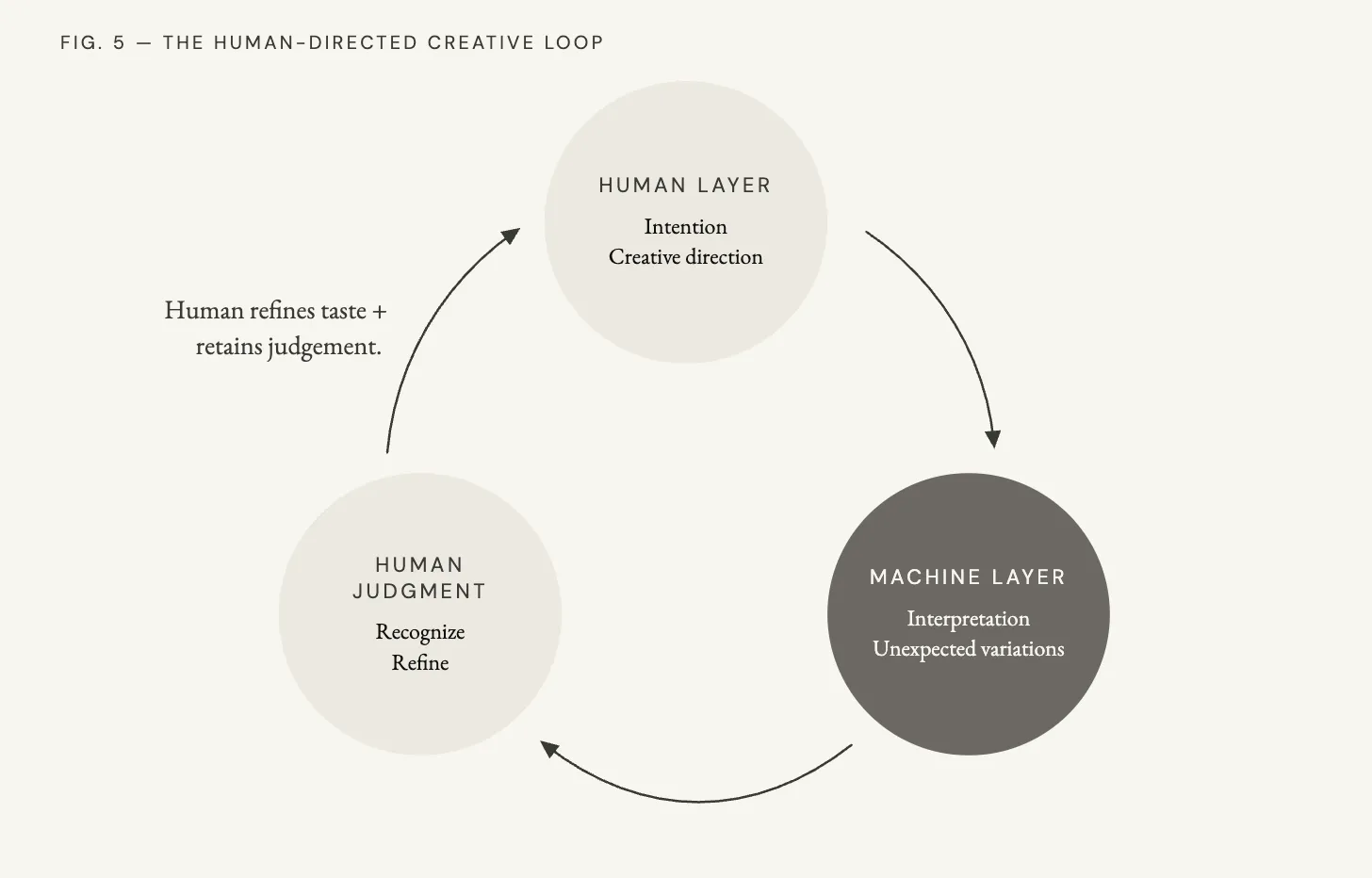
This tension is why I developed Human Directed™, the AI creative direction methodology I teach professional creatives.
The essential skill isn’t simply generating convincing imagery or film. It’s sustaining a creative dialogue between human direction and machine interpretation, with the human as the ultimate decision-maker.
What is the concept? The emotional intention? The world and visual language? What should the audience experience?
In my framework and process, the Human Layer establishes concept, narrative, worldbuilding, and shot intention. The Machine Layer interprets and executes through AI workflows. As new possibilities emerge, we return to the Human Layer to evaluate, refine, and sometimes rethink the vision.
Human-directed doesn’t mean controlling every pixel. It means knowing what matters enough to decide what to delegate.
The process isn’t a fixed sequence in which the human thinks and the machine merely executes.
It is a dialogue. Sometimes an output changes the original concept. Sometimes it reveals a weakness in our direction. Sometimes the best choice is to discard a beautiful result because it doesn’t belong to the world we’re building.
Creative direction is the ability to distinguish meaning from superficial beauty and novelty. A developed sense of taste doesn’t close us off from surprise. It allows us to recognize the right surprises.
The future of creative authorship
I don’t believe the most interesting future is one where humans precisely control machines—or surrender the entire creative process to them.
Since the beginning of time, artists have cultivated a relationship with the unseen Source of Creativity. Now, a Third Entity enters that relationship, introducing possibilities beyond our individual imagination.
AI’s interpretation can provoke in us genuine new thinking. It can challenge assumptions and transform our work into something we didn’t know we were searching for.
But it cannot determine what those discoveries mean to us. That remains our responsibility.
The challenge is to remain receptive to the Source, while collaborating with the Third Entity to expand our imagination — all without surrendering the process through which our individual creative judgement is formed.
Because the most compelling possibilities may not come from the human or the machine alone. They may emerge from the space between them.